Destination of the Week: Park Hotel Tokyo
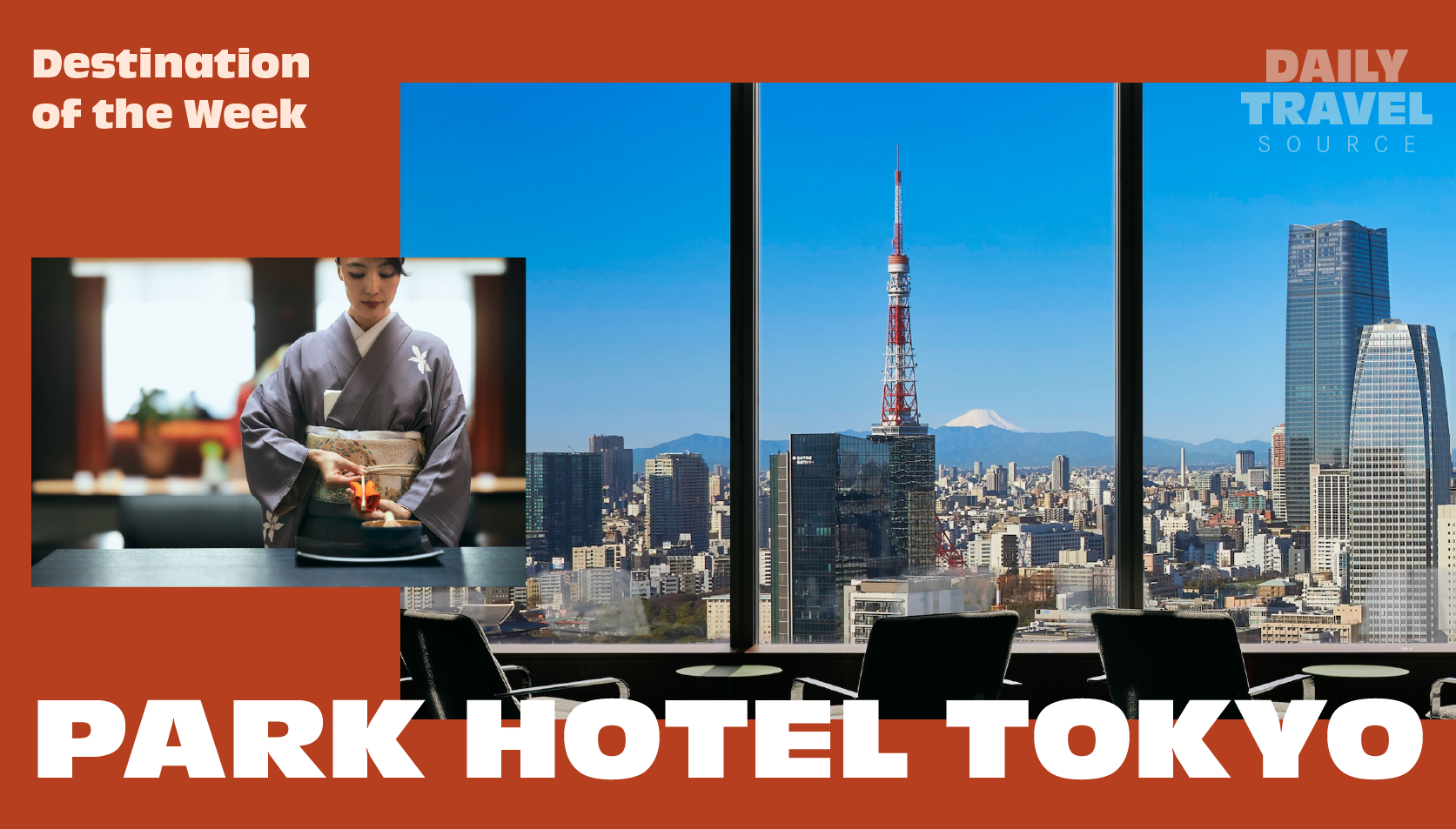
Photo courtesy of Park Hotel Tokyo
At Park Hotel Tokyo, art is more than something to admire and it is woven into every aspect of the guest experience, from thoughtfully designed spaces to the spirit of Japanese hospitality. Guided by its philosophy of allowing guests to feel Japanese aesthetics rather than simply learn about them, the hotel creates an immersive stay shaped by light, seasonality, architecture, and contemporary art. Its signature Artist in Hotel residency program transforms guest rooms into one-of-a-kind living works of art, offering travelers a rare connection to Japan's creative culture.
How does Park Hotel Tokyo translate the concept of art into a holistic hospitality experience that guests can feel beyond just visual design?
At Park Hotel Tokyo, art is not treated as simple visual design or decoration. Instead, it is positioned as the core of a holistic hospitality experience—one that actively shapes the guest’s stay itself.
We believe there is a form of art experience that can exist precisely because we are a hotel. In a museum, art is something people go to see. In a hotel, however, guests live with it: they arrive, settle in, go out, return, rest, and take time to reflect. Art is not a one-time object of viewing, but a presence that accompanies the rhythm of travel—subtly shifting its impression depending on the time of day and the guest’s state of mind, and gradually becoming part of memory.
The concept of Park Hotel Tokyo is “a spatiotemporal experience where guests can physically sense Japanese aesthetics.” What matters most to us is not explaining Japanese aesthetics through words or knowledge, but allowing guests to feel them through space and lived experience. For this reason, art does not exist as independent exhibits; it is integrated into the overall design of the space itself.
Concretely, everything becomes part of the art experience: the views from the lobby and corridors; a spatial composition where Tokyo’s urban dynamism coexists with stillness; seasonal changes in exhibitions; the balance of light and shadow; and the calm atmosphere that flows throughout the hotel. As guests move through the property, they naturally engage with the artworks and spaces, and come to sense distinctly Japanese qualities—such as ma (intentional space), quietness, and the passage of time.
We also consider hospitality itself to be an essential element of this experience. The staff’s posture, tone of voice, choice of words, and sensitivity to personal distance all reflect aesthetic sensibilities rooted in Japanese culture and the spirit of omotenashi. It is only when space, light, circulation, art, and human presence overlap that our concept—a spatiotemporal experience of Japanese aesthetics—is fully realized.
Ultimately, the art experience at Park Hotel Tokyo is not about showing a large number of artworks. Rather, it is about gently opening the senses over the course of a stay, allowing guests’ perceptions of Tokyo and Japanese culture to shift, even slightly. That quiet transformation is the form of art and hospitality we strive to offer.
Your philosophy emphasizes experiencing Japanese beauty through all five senses. Can you share how this comes to life across the guest journey, from arrival to departure?
Park Hotel Tokyo’s philosophy of “experiencing Japanese beauty through all five senses” is brought to life gradually and organically throughout the entire guest journey, from arrival to departure.
From the moment guests step into the hotel lobby, they are enveloped by a dramatic atrium that rises from the 25th to the 34th floor. Natural light filters in through the glass ceiling, and on rainy days, guests may subtly notice the sound of rainfall. These elements engage not only the sense of sight, but also hearing and physical perception, heightening awareness of time and season. In Japan, there has long been an aesthetic appreciation for the changing seasons themselves—sensing those shifts, receiving them, and savoring them. The lobby serves as an entry point that conveys this sensibility not through words, but through experience.
From the lobby, guests can also enjoy sweeping views of Tokyo, including Tokyo Tower and, on clear days, Mount Fuji. We see the city’s constantly shifting urban landscape as a form of art in itself. The overlapping layers of nature, city, and man-made structures symbolize Tokyo’s complexity and offer insight into how Japanese aesthetics continue to exist and evolve in a contemporary context.
The year-round “Art Colours” exhibition displayed in the lobby is refreshed with each season. In Japan, there is a deeply rooted sensibility of incorporating seasonal change into everyday life and finding beauty in its transitions. “Art Colours” is therefore not simply an exhibition, but a form of seasonal shitsurai—the thoughtful preparation of space—designed to allow guests to experience Japanese aesthetics through all five senses.
We also believe that art has the power to create connections between people. In the lobby and atrium, artworks often become natural catalysts for conversation—between guests, and between guests and staff—making social interaction and moments of serendipity part of everyday life. Unexpected encounters, whether with people, conversations, or artworks, deepen travel memories and make them more personal. At the same time, the hotel becomes a place where travelers from around the world can naturally discover Japanese local artists.
Tokyo is a multifaceted city where history and modernity, speed and stillness, global influences and local culture overlap in complex layers. While this richness is part of its appeal, it is often experienced in fragments. At Park Hotel Tokyo, we reinterpret this layered city through the lens of Japanese aesthetics, and deliver it to guests in a way that feels accessible, cohesive, and memorable—through art, space, and the experience of staying with us.
In this way, being an art hotel at Park Hotel Tokyo is not simply about decoration or design. It functions as a kind of translation device—one that allows guests to experience Japanese aesthetics through all five senses and to deeply savor the city of Tokyo through an immersive, stay-based cultural experience that can exist only in a hotel.
How does the hotel incorporate the changing seasons into its design, dining, and overall atmosphere?
At Park Hotel Tokyo, the changing seasons of Japan are not expressed through overt decoration or seasonal motifs. Instead, they are woven into the hotel’s overall design, spatial experience, dining, and atmosphere, allowing guests to sense them naturally through all five senses.
From the moment guests step into the lobby, they are enveloped by a dramatic atrium that extends from the 25th to the 34th floor. Natural light filters through the glass ceiling, and on rainy days, guests may subtly notice the sound of rainfall. These elements engage not only sight, but also hearing and physical perception, heightening awareness of time and season. In Japan, there has long been an aesthetic appreciation for the seasons themselves—sensing their transitions, receiving them, and savoring them. The lobby serves as an entry point that conveys this sensibility not through explanation, but through experience.
Japanese aesthetics are also reflected in the details of the lobby’s design. The carpet patterns and table arrangements evoke the spirit of karesansui (dry landscape gardens), expressing a uniquely Japanese sense of space that values stillness, balance, and meaningful emptiness. In the evening, projection mapping appears on the large lobby wall, recalling the presence of a hanging scroll. While using contemporary techniques, this installation allows guests to experience the traditional Japanese concept of shitsurai—the thoughtful preparation of space—through art.
The year-round “Art Colours” exhibition displayed in the lobby is refreshed with each season. In Japan, there is a deeply rooted sensibility of incorporating seasonal change into everyday life and finding beauty in its subtle transitions. “Art Colours” is therefore not simply an exhibition, but a seasonal form of shitsurai—expressing atmosphere, color, and theme throughout the space—so that guests can experience Japanese seasons and aesthetics through all five senses.
This philosophy extends to dining as well. The hotel’s two restaurants feature works by contemporary local artists, allowing guests to enjoy their meals in immersive, art-filled spaces. By layering art and spatial experience onto the everyday act of dining, a meal becomes more than nourishment—it becomes a memorable moment. Here too, Japanese aesthetics are quietly expressed through seasonality, materiality, and the overall tone of the space.
In this way, Park Hotel Tokyo does not present the four seasons as explicit themes or decorative elements. Instead, we value allowing guests to sense them naturally—through light, sound, spatial composition, art, and the way people inhabit the space. To notice the passing of the seasons, to savor them, and to take that lingering impression home—this is how we translate Japan’s seasons into a hotel experience.
With artists contributing to the hotel’s identity, including uniquely designed rooms, how do these collaborations shape the guest experience, and what do they reveal about contemporary Japanese art today?
At Park Hotel Tokyo, we operate an artist residency program that we call “Artist in Hotel.”
This initiative, in which artists stay at the hotel while creating their work, is a symbolic and essential expression of our core concept.
Rather than exhibiting completed artworks after the fact, Artist in Hotel invites artists to immerse themselves in the space itself and create while engaging directly with the environment. As a result, the artworks are not decorative elements, but works that are deeply intertwined with the guest rooms, the hotel, and the atmosphere of that specific place. Through these spaces, guests experience Japanese sensibility and aesthetic values not through explanation, but through lived experience.
For guests, this means they are not simply staying in “a room with art,” but inhabiting a space shaped by an artist’s perspective and sensitivity. This transforms the stay into something more personal and memorable. At the same time, for artists, the hotel becomes a rare platform to share their expression—and aspects of Japanese aesthetics—with an international audience, as travelers from around the world encounter their work organically during their stay.
Each space created through Artist in Hotel is entirely unique, with no two rooms alike. This sense of singularity plays a key role in shaping Park Hotel Tokyo’s distinctive stay experience and brand identity. The program functions both as support for artists and as a means of conveying Japanese aesthetics to guests, while continuously nurturing the individuality of the hotel itself.
In this way, Artist in Hotel reveals an important aspect of contemporary Japanese art today: its ability to exist not only as an object to be viewed, but as an environment to be lived in—quietly engaging with everyday life, space, and human experience.
In a bustling city like Tokyo, how does Park Hotel Tokyo meet travelers today with an inspiring art-led, immersive stay?
In the energy and intensity of a global city like Tokyo, Park Hotel Tokyo offers contemporary travelers an inspiring, art-led, immersive stay—one that invites them to reflect on the very meaning of why they choose to stay in a particular place, and to discover a new source of travel inspiration.
Tokyo is a multifaceted city where history and modernity, speed and stillness, global influences and local culture overlap in complex layers. While this richness is part of its appeal, it can also be overwhelming, often experienced in fragments. At Park Hotel Tokyo, we reinterpret and “re-edit” this layered city through the lens of Japanese aesthetics, delivering it in a way that feels accessible, coherent, and deeply memorable—through art, space, and the experience of staying with us.
Our aim is not simply to provide a convenient place to sleep. By being an art hotel, we create an experience in which staying itself becomes the purpose of the journey. Guests choose Park Hotel Tokyo not only for its location or value, but because they are drawn to the unique spaces, sensibilities, and sense of time that can only be experienced here. This becomes a powerful reason for choice—one that cannot be measured by price or proximity alone.
The art found throughout the hotel also serves as a gateway to Japanese culture. Guests encounter core elements of Japanese aesthetics—such as ma (intentional space), quietness, seasonal transition, materiality, and mindful gesture—not through explanation, but through experience. Unlike a trip focused solely on sightseeing, time spent in the hotel is more introspective and resonant. Within that time, naturally encountering Japanese culture deepens the overall journey and gently shifts perspectives and values.
At the same time, Park Hotel Tokyo is an international crossroads, where travelers from around the world gather, and an important platform for local artists. In the open environment of a hotel, even those who might not visit museums or galleries encounter art by chance. These unexpected encounters spark curiosity and lasting memories for guests, while offering artists an opportunity to share Japanese aesthetics and contemporary expression with a global audience. In this way, art functions as a point of connection—linking guests and artists, Tokyo and the world.
Ultimately, the art experience at Park Hotel Tokyo goes far beyond decoration or staging. Through art, we aim to offer travelers a moment to see Tokyo from a different perspective and to reconnect with their own sensibilities. That is the inspiration we seek to provide modern travelers—and the role we believe this hotel plays within one of the world’s most dynamic cities.