Destination of the Week: Galapagos Safari Camp
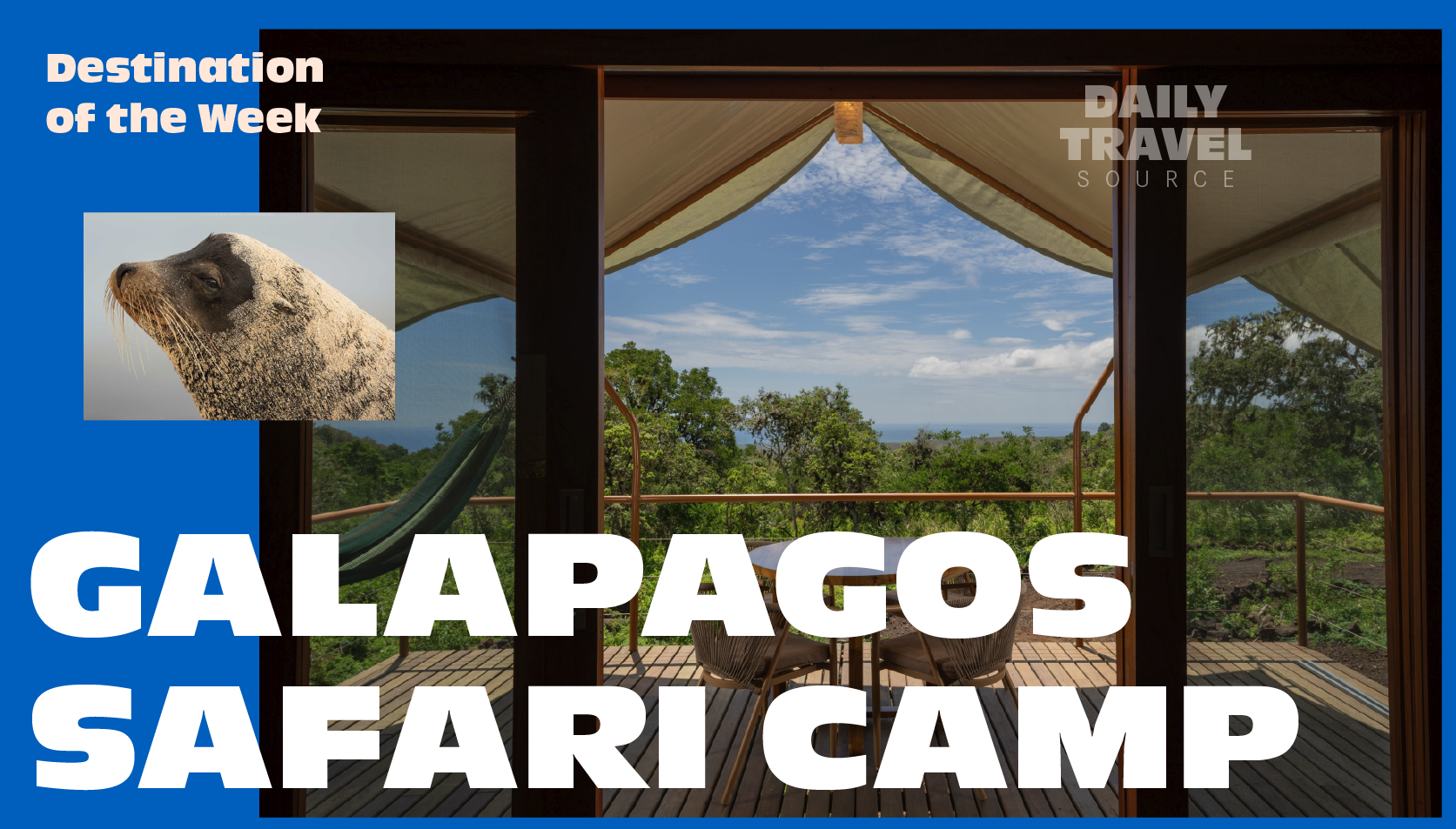
Photo courtesy of Galapagos Safari Camp
In this week’s Destination of the Week, we connected with Stephanie Bonham-Carter, co-founder of Galapagos Safari Camp, to discuss how the pioneering property brought the spirit of an African safari to the Galápagos nearly 20 years ago. From redefining land-based exploration to championing “appropriate luxury” rooted in sustainability and connection, Stephanie shares the vision that continues to shape one of the destination’s most distinctive experiences.
Galapagos Safari Camp was the first tented safari experience in Latin America. What inspired you to bring an African-style safari model to the Galapagos, and how has that vision evolved over the past two decades?
The idea came very instinctively. We had spent time in Africa and were deeply moved by the sense of space, immersion, and quiet connection that a safari offers. When we came to the Galápagos, we felt something similar in spirit, but the experience at the time was almost entirely shaped by cruises.
We saw an opportunity to create a land-based experience that allowed guests to feel the islands rather than just pass through them. The highlands of Santa Cruz offered this incredible, almost hidden world, lush, wild, and full of life, which felt like the perfect setting for a safari camp.
Over the past two decades, that vision has not fundamentally changed, but it has deepened. We have refined what we call “appropriate luxury,” focusing less on adding and more on editing. It is about comfort, yes, but also restraint, authenticity, and sensitivity to place. If anything, we have become more committed to preserving that original simplicity and sense of discovery.
With so much of Galapagos tourism centered around cruises, how does a land-based stay at the camp transform the way guests experience the islands?
A land-based stay changes the experience, but not all land-based models are the same.
In the Galápagos, everything operates within the framework of a National Park. Access to uninhabited islands is tightly regulated, with a limited number of licensed boats, guides, and vehicles. As a result, many land-based stays inevitably mirror aspects of the cruise model, joining fixed departures with little room to shape the journey.
What we set out to do is something more considered and more complete.
Rather than offering accommodation with optional excursions, we design each safari as a whole from the outset. The journey begins at the time of booking, where we curate a balance of sea and land experiences around the guest, selecting the right boats, the right days, and the right pace, within the realities of the islands.
Guests still explore the iconic uninhabited islands, but they do so as part of a thoughtfully constructed itinerary, not a series of available slots. And each day, they return to a place that is calm, private, and grounded in the highlands.
It creates a very different rhythm. There is more intention, more flexibility where it matters, and a stronger sense of connection. You are not simply fitting into the Galápagos system, you are experiencing it in a way that feels personal and cohesive from beginning to end.
Sustainability is central to the camp’s ethos. Can you share how Galapagos Safari Camp balances immersive luxury with environmental responsibility?
For us, sustainability has never been a layer added on top, it is simply how we live and operate.
From the beginning, we made conscious decisions to work with what the environment allows rather than imposing on it. The camp is designed to be light on the land, using natural airflow instead of heavy infrastructure, harvesting rainwater, and maintaining a strong connection to the surrounding ecosystem.
Equally important is how we operate day to day. We work with local partners, invest in people, and keep our scale intentionally small so that experiences remain personal and impact remains low.
Luxury, in our view, is not about excess. It is about feeling well cared for, being in the right place, and having the time and space to connect. When you define it that way, sustainability and luxury are not in conflict, they reinforce each other.
The camp offers highly personalized safari experiences. What does a typical day look like for guests, and how do you tailor itineraries to individual interests?
The key difference is that we don’t start shaping the experience on arrival, we begin at the time of booking.
We take the time to understand what truly matters to each guest. How many days would they like to spend at sea exploring uninhabited islands? Are they drawn to wildlife, photography, diving, or a deeper connection with local life? Would they enjoy something as simple and real as spending a day with a fisherman? Are they travelling as a couple, a family, or a multi-generational group needing parallel experiences? Are they celebrating something meaningful?
From there, we design the safari as a whole, selecting the right combination of sea and land experiences, and setting a pace that reflects both the realities of the National Park and the level of privacy or flexibility they are looking for.
Once at camp, a typical day unfolds quite naturally. It may begin with a morning departure to sea, or a more relaxed start in the highlands, followed by a guided exploration. Afternoons can be active or restorative, depending on the rhythm we have set. Evenings are calm, often shaped by reflection and conversation.
What matters is not the structure of the day, but the fact that it feels right for the guest. Because the thinking has been done in advance, the experience flows, allowing them to be fully present rather than navigating options as they go.
As you approach 20 years of operations and introduce new Photography Safaris for 2026, what excites you most about the future of Galapagos Safari Camp and how travelers will experience the destination next?
What excites me most is not adding more, but going deeper.
The Photography Safaris are a good example of that. They are not just about taking pictures, but about slowing down, observing more carefully, and engaging with the environment in a more intentional way.
Looking ahead, I think travelers are increasingly seeking meaning over volume. They want experiences that feel personal, thoughtful, and grounded in a real sense of place.
After nearly twenty years, our role is to stay true to what we have always believed in, while continuing to refine how we deliver it. If we can help guests leave with a deeper understanding of the Galápagos, and a genuine emotional connection to it, then we are doing what we set out to do.